প্রথম বিক্ষোভ থেকে সরকার পতন পর্যন্ত অভ্যুত্থানের প্রামাণ্যচিত্র ও ভিডিও অনুসন্ধান।

video
This is Episode 5 ("March to Dhaka") of Al Jazeera's investigative podcast series "36 July: Uprising in Bangladesh," which documents the events of August 5, 2024 — the day Prime Minister Sheikh Hasina was forced from power following a massive popular uprising. The episode covers two main threads: the personal story of Nafisa, a student activist who was shot during the protests and called her father to say she believed she would die, illustrating the human cost of the uprising; and the broader political and military events of that day, including the massive march of hundreds of thousands of people toward Dhaka, Hasina's refusal to resign and her pressure on the military to shoot protesters, and the army's ultimate decision to stand down and tell her she had 40 minutes to flee. Eyewitness accounts from protesters, journalists, and analysts describe both the jubilation of the crowds and the ongoing deadly violence from police and armed Awami League supporters, including a harrowing account of students being shot at from rooftops during the march. The title "36th July" refers to the students' symbolic extension of July by five days to mark August 5th as the date of their victory.
Source: YouTube
video
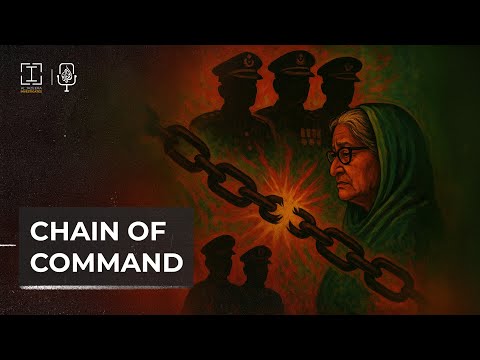
This is Episode 4 ("Chain of Command") of Al Jazeera's investigative documentary series 36 July: Uprising in Bangladesh, narrated by Kevin Herzen. It covers the final days of Prime Minister Sheikh Hasina's rule in Bangladesh during the July-August 2024 student uprising. The episode focuses on three main topics: Hasina's failed attempts to suppress and deflect the protest movement — including media manipulation during an internet blackout, staging coerced student "hostage videos," and hosting victims' families at her residence; a critical August 3rd military turning point, in which junior army officers staged a deliberate internal meeting (a "Darbar") to pressure the Army Chief to stop firing on civilians, effectively withdrawing the military's support for Hasina; and the broader context of Hasina's 15-year authoritarian consolidation of power, including the 2004 grenade attack that shaped her paranoid leadership style, her use of the Digital Security Act to silence critics, and her deployment of the paramilitary RAB unit, accused of over 600 forced disappearances since 2009. The episode sets up the conclusion of the series, previewing Hasina's eventual flight from Bangladesh on August 5th and the storming of her official residence by protesters.
Source: YouTube

video
This BBC World Service documentary investigates the political uprising in Bangladesh that led to the fall of Prime Minister Sheikh Hasina on August 5, 2024. It examines the protests that began in July 2024 over Bangladesh's discriminatory job quota system, which reserved 30% of government positions for families of independence war veterans, and how those protests escalated into a broader revolution against Hasina's 15-year authoritarian rule. The documentary focuses specifically on the violent government crackdown in the Jatrabari neighborhood of Dhaka, where police fired 2,444 live rounds and 695 assault rifle rounds at protesters, killing at least 52 people in a single day. Using leaked recordings, internal police documents, and eyewitness accounts, the film investigates who ordered the lethal force, with evidence pointing to direct orders from Sheikh Hasina herself. The key turning point covered is the killing of 23-year-old student Abu Sayed on July 16, which went viral and transformed the protests into a mass uprising, ultimately culminating in the "March for Dhaka" on August 5, after which Hasina fled the country by helicopter to a military airport as the army informed her they could no longer protect her residence from the advancing crowds.
Source: YouTube
videosensitive
Source: International Truth and Justice Project (ITJP) Bangladesh
videosensitive
Source: International Truth and Justice Project (ITJP) Bangladesh

video
This is Episode 2 of Al Jazeera's investigative series "36 July: Uprising in Bangladesh," titled "Making of a Martyr." It documents the events of July 16, 2024, at Begum Rokeya University in Rangpur, when student activist Abu Sayed was shot and killed by police during anti-government protests against Prime Minister Sheikh Hasina's government. The episode centers on Tahidul Hakim (referred to as "Sam" or "CM"), a 24-year-old student journalist who was present that day and conducted three Facebook live streams documenting the confrontation. His footage captured Abu Sayed's iconic final act — standing in the road with arms outstretched challenging police to shoot him — and subsequently his death. Sam himself was shot with 50-60 pellets while filming and carrying Abu Sayed's body, yet continued broadcasting from the hospital. The key themes include the role of citizen journalism and social media in fueling the protest movement, the transformation of Abu Sayed into a national martyr whose image now appears on murals and t-shirts across Bangladesh, and the personal trauma experienced by Sam, who blames himself for being unable to save Abu Sayed despite his bravery in documenting the event.
Source: YouTube
video
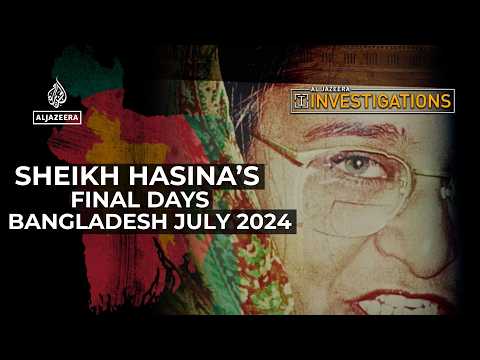
This Al Jazeera investigative documentary examines the final 36 days of Sheikh Hasina's 15-year rule as Bangladesh's Prime Minister, culminating in her flight from the country in 2024. It focuses specifically on her secret orders to security forces during a student-led protest movement that began over a controversial government job quota system reserving positions for descendants of 1971 liberation war veterans. The main topics covered include: exclusive intercepted phone recordings revealing Hasina allegedly directing police to shoot protesters and pressuring officials to falsify autopsy reports; the killing of student Abu Saeed, who became a martyr symbol for the uprising after being shot on camera; and the systematic cover-up attempts by Hasina's government, including attempts to bribe the doctor who performed Saeed's autopsy. The documentary also provides background on Hasina's authoritarian consolidation of power, her use of a feared youth paramilitary wing, and a covert surveillance apparatus run by military intelligence to track and abduct political opponents.
Source: YouTube
video
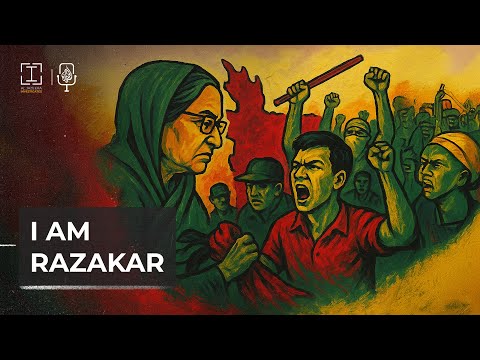
This is the transcript of Episode 1 ("I Am Razakar") of Al Jazeera's investigative podcast series 36 July: Uprising in Bangladesh, which chronicles the 2024 popular uprising that ousted Prime Minister Sheikh Hasina and her Awami League government on August 5, 2024. The episode covers three main topics: 1. The fall of Sheikh Hasina — Journalists and activists walk through the ransacked ruins of Gonobhaban (the prime minister's official residence in Dhaka), examining how Hasina's increasingly authoritarian rule collapsed after weeks of protests, including exclusive intercepted phone calls in which she personally ordered lethal force against demonstrators. 2. The quota system controversy — The episode explains how student protests began over a government job quota system reserving 56% of positions for descendants of 1971 independence war freedom fighters, which students viewed as a mechanism for rewarding ruling party loyalists rather than merit. 3. The "Razakar" turning point — The episode details how Hasina's July 14, 2024 press conference — in which she insulted protesters by calling them "razakars" (a deeply offensive term for Pakistani collaborators during the 1971 war) — dramatically backfired, galvanizing mass student protests across the country, including violent crackdowns by the Awami League's student wing, Chhatra League.
Source: YouTube