যে গান ও র্যাপ আন্দোলনের কণ্ঠস্বর হয়ে উঠেছিল — এবং সেই শিল্পীদের ওপর নিপীড়নের নথি।
সংবাদ১ আগস্ট, ২০২৪
The Artists at Risk Connection (ARC), a project of PEN America, has condemned the arrest of Bangladeshi rapper Hannan Hossain Shimul, who was detained on 25 July in Narayanganj and placed on a two-day remand. According to the document, Hannan gained popularity for his song "Awaaz Utha," which was released on 18 July, and he was arrested along with friends after attending a funeral prayer when police allegedly found protest video footage on their mobile phones. ARC's senior manager stated that "Hannan's arbitrary arrest is the most recent in a series of brutal and systematic attacks on free expression in Bangladesh" and called for his immediate release, citing concerns about lack of transparency and disregard for due process by Bangladeshi authorities.
উৎস: The Business Standard
সংবাদ৩১ জুলাই, ২০২৪
According to the document, Bangladeshi rapper Hannan Hossain Shimul, known for his song "Awaaz Utha," was arrested on July 25 in Narayanganj and placed on a two-day remand after police allegedly found video footage of recent protests on his mobile phone while he and friends were returning home from a funeral prayer. The document states that his arrest has generated concern among followers and in the music industry, with some using the hashtag #freehannan to demand his release, and notes that his song "Awaaz Utha" was released on July 18 with a caption stating the artists seek "to amplify the voices of our peers and shed light on the issues affecting our country."
উৎস: The Business Standard

গান
'SAHAN - Rajakar ( রাজাকার ) | BANGLADESH' — protest rap from Bangladesh's July 2024 uprising, archived from a community playlist of the movement's rap songs. Bengali rap was one of the uprising's protest mediums; songs circulated as anthems at marches and online. Archived as a primary source; lyrics are not transcribed — listen to the recording.
উৎস: SAHAN

গান
'HANNAN, SnareByt - AWAAZ UTHA (আওয়াজ উডা) | BANGLADESH' — protest rap from Bangladesh's July 2024 uprising, archived from a community playlist of the movement's rap songs. Bengali rap was one of the uprising's protest mediums; songs circulated as anthems at marches and online. Rapper Hannan (Hannan Hossain Shimul), whose protest rap 'Awaaz Utha' became an anthem of the movement, was arrested during the July 2024 crackdown over the song and released after the fall of the Hasina government on 5 August 2024. Archived as a primary source; lyrics are not transcribed — listen to the recording.
উৎস: HANNAN & SnareByt
সংবাদ
According to the article, rapper Hannan Hossain Shimul, known for his song "Awaaz Utha," was arrested on July 25 in Narayanganj and granted a two-day remand by the court, though specific charges were not disclosed by police. The document states that according to producer Samir Islam, Hannan was apprehended while returning home from a funeral prayer after police allegedly found video footage of recent protests on their mobile phones, and that his family had not received a copy of the arrest report. The article notes that the arrest has prompted concern in the music industry, with musicians using the hashtag #freehannan to call for his release, while "Awaaz Utha" has meanwhile accumulated 298,000 views on YouTube in eleven days.
উৎস: The Daily Star

গান
'Desh Kar? দেশ কার? - Lunatix Veer X Rhythmsta | Quota Reform Movement Bangladesh | GoatZilla' — protest rap from Bangladesh's July 2024 uprising, archived from a community playlist of the movement's rap songs. Bengali rap was one of the uprising's protest mediums; songs circulated as anthems at marches and online. Archived as a primary source; lyrics are not transcribed — listen to the recording.
উৎস: Lunatix Veer & Rhythmsta
সংবাদ
According to the document, this article examines the role of Bengali rap musicians in responding to mass protests in Bangladesh related to a quota reform movement that began in August 2026. The document states that dozens of rap songs emerged within a month to amplify protesters' demands for freedom of expression and merit-based opportunities, with rappers like Hannan Hossain Shimul (whose song "Awaaz Utha" garnered over 600,000 views before his arrest) and others using lyrics referencing Bangladesh's 1971 Liberation War to challenge what the document characterizes as government oppression and violence that resulted in over 165 deaths. The article argues that these young rappers and musicians have used poetry, lyricism, and music as tools of resistance against state force, continuing a historical tradition in Bengal of cultural expression during political upheaval.
উৎস: The Daily Star
সংবাদ
According to the article, rapper Hannan Hossain Shimul, known for his song "Awaaz Utha," was arrested on July 25 in Narayanganj during student protests against the Awami League government, with cultural personalities alleging his arrest was connected to his rebellious lyrics. The document states that Hannan was freed on August 6, 2024, one day after Sheikh Hasina's regime fell on August 5, when the Chief Judicial Magistrate Court of Narayanganj granted bail to those arrested in relation to the student protests.
উৎস: The Daily Star
সংবাদ
The article recounts the experiences of rapper Hannan Hossain Shimul from Narayanganj, who was arrested on July 25, 2024, following the release of his rap song "Awaaz Utha." According to the document, Hannan was apprehended by police who found the song on his confiscated phone along with videos of police confronting protesters; he was held at the police station for 39 hours, charged with vandalism and arson, and subjected to demands for bribes totaling 150,000 taka before being transferred to court. The document states that Hannan spent 12 days in jail before being released on August 6 following the fall of Sheikh Hasina's government in a student-led uprising, and that he has since released a new track titled "Risk" and is working on another song inspired by his imprisonment.
উৎস: The Daily Star

গান
'SIAM - Abu Sayed ( আবু সাঈদ ) | BANGLADESH' — protest rap from Bangladesh's July 2024 uprising, archived from a community playlist of the movement's rap songs. Bengali rap was one of the uprising's protest mediums; songs circulated as anthems at marches and online. Archived as a primary source; lyrics are not transcribed — listen to the recording.
উৎস: SIAM

গান
'কোটা চাইনা, মেধা চাই রেপ Song ২০২৪। ! Imtiaz Akib' — protest rap from Bangladesh's July 2024 uprising, archived from a community playlist of the movement's rap songs. Bengali rap was one of the uprising's protest mediums; songs circulated as anthems at marches and online. Archived as a primary source; lyrics are not transcribed — listen to the recording.
উৎস: Imtiaz Akib

গান
'SIAM - Pani Lagbe Pani (পানি লাগবে পানি) | Mugdho (মুগ্ধ) | BANGLADESH' — protest rap from Bangladesh's July 2024 uprising, archived from a community playlist of the movement's rap songs. Bengali rap was one of the uprising's protest mediums; songs circulated as anthems at marches and online. Archived as a primary source; lyrics are not transcribed — listen to the recording.
উৎস: SIAM

গান
'SHEZAN - Kotha Ko (কথা ক) | BANGLADESH' — protest rap from Bangladesh's July 2024 uprising, archived from a community playlist of the movement's rap songs. Bengali rap was one of the uprising's protest mediums; songs circulated as anthems at marches and online. Archived as a primary source; lyrics are not transcribed — listen to the recording.
উৎস: SHEZAN
সংবাদ
According to this article by political science professor Navine Murshid, Bangladesh's July 2024 uprising was marked by a significant shift in protest culture, with rap songs such as "Awaz Utha" (Raise Your Voice) and "Kotha Ko" (Speak Up) emerging as the movement's anthems rather than traditional protest music like Rabindra Sangeet. The document states that these songs, produced independently and distributed through social media platforms rather than performed collectively at protests, represented a generational break from earlier democratic movements, with younger Bangladeshis adopting a global musical style to directly challenge state violence and express demands ranging from job quota reform to democratic freedoms. The article discusses how established cultural figures and organisations, many aligned with the Awami League government, largely remained silent during the uprising, creating a vacuum that was filled by new, unburdened artists, while also examining narratives attempting to characterise the movement as right-wing or Islamist and warning of the movement's susceptibility to political co-option.
উৎস: The Daily Star
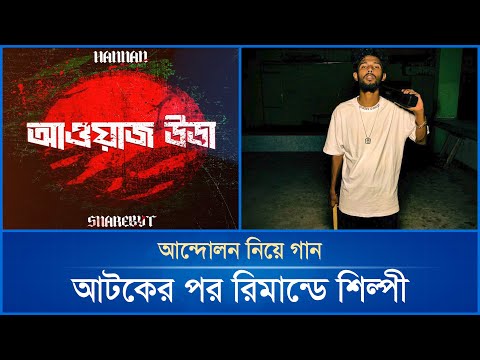
সম্প্রচার
''আওয়াজ উডা' গানের কারণে রিমান্ডে! | Mytv News' — protest rap from Bangladesh's July 2024 uprising, archived from a community playlist of the movement's rap songs. Bengali rap was one of the uprising's protest mediums; songs circulated as anthems at marches and online. Archived as a primary source; lyrics are not transcribed — listen to the recording.
উৎস: Mytv News

গান
'Ek Dofa (এক দফা) | Bangla Rap Song | Rafsan Ahmed Siam | (এক দফা দাবি নিয়ে রেপ গান)' — protest rap from Bangladesh's July 2024 uprising, archived from a community playlist of the movement's rap songs. Bengali rap was one of the uprising's protest mediums; songs circulated as anthems at marches and online. Archived as a primary source; lyrics are not transcribed — listen to the recording.
উৎস: Rafsan Ahmed Siam